
"He said right after graduation, 'You’re going to get signed and you’re on the job.' And right after I crossed that stage, the next day I went to work," recalls Mauricio Mojica. For Mojica, a recent graduate of the Marion C. Moore School electrical pathway, the transition from student to professional was not a standard job hunt but a seamless handoff from the classroom to the job site.
In an era defined by a critical shortage of skilled tradespeople, the Academies of Louisville and the Independent Electrical Contractors (IEC) of Kentuckiana have moved beyond traditional career exploration to build a functional, high-speed workforce pipeline. By investing in talent while students are still in the classroom, the partnership ensures that graduation day serves as a professional launchpad rather than a finish line.
A Bridge to Industry Readiness
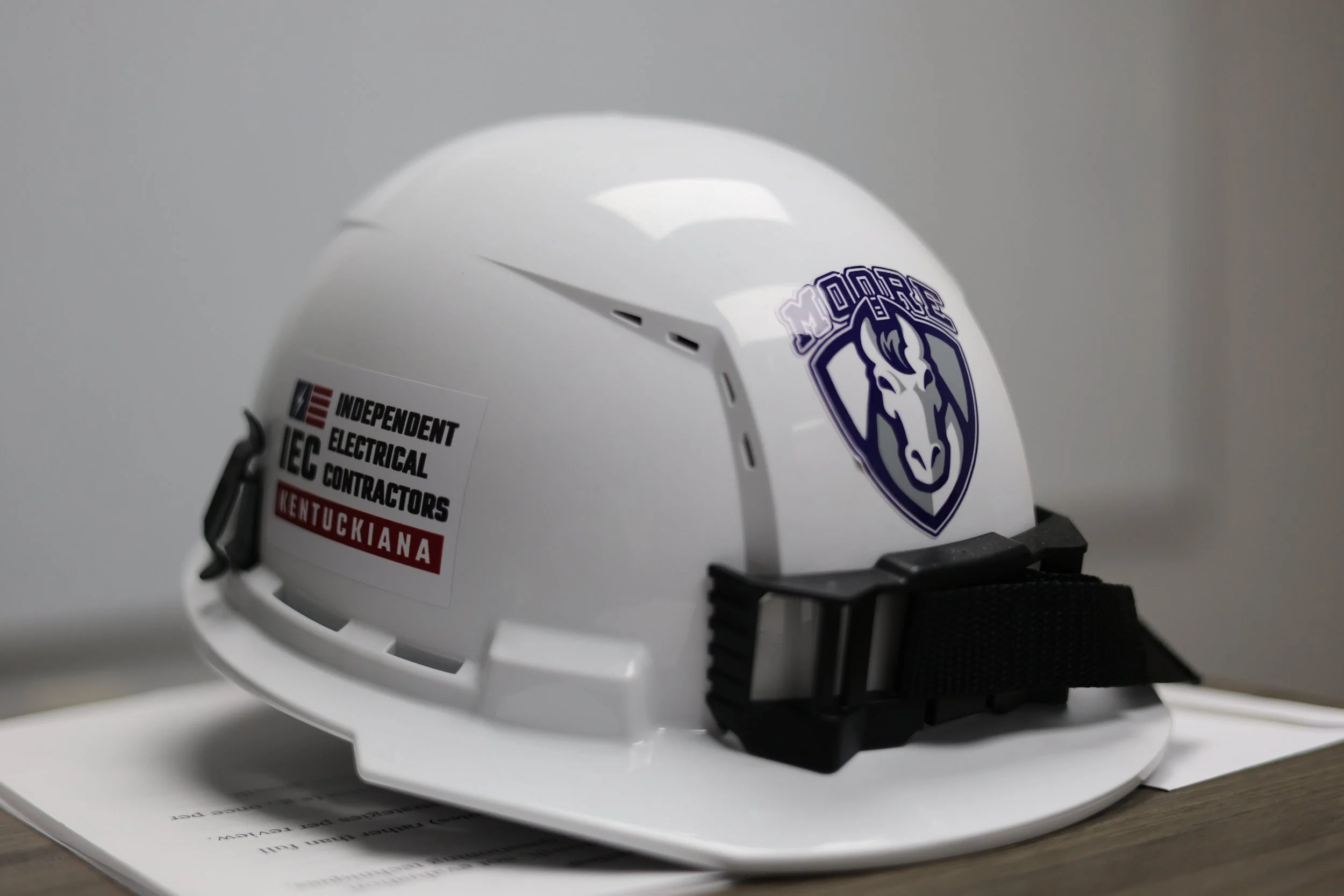
The foundation of this seamless transition is the IEC Pre-Apprenticeship Program. Designed as a strategic extension of the Academies’ classroom learning, the six-week immersion blends advanced electrical theory with direct mentorship from industry professionals. This structure allows students to apply their school-based foundations—including TRACK and OSHA certifications—to real-world industrial demands before they ever leave high school.
"The pre-apprenticeship was an opportunity for kids in the local public school system to come into the IEC program and go through more or less the same steps they’re going to go through once they get into the field," noted Rob Barnett, owner of Indeed Electric.
This model shifts the traditional hiring dynamic. Rather than vetting strangers through a standard interview process, contractors are actively training their future employees months in advance. "It was a good way for us to be able to see their skills and for us to be able to show them further the skills they’re going to need," Barnett explained.
Risk into Reward: The Business Case for Early Investment
For many contractors, the primary barrier to hiring young talent is the perceived risk of "green" employees who require months of foundational training. The Academy model addresses this concern by front-loading the learning curve. Students spend hundreds of hours in controlled lab environments under the guidance of veteran instructors like Moore’s retired electrical instructor Glenn Pifer, mastering safety protocols and electrical fundamentals long before they step onto a job site.
“I’m not saying that I wanted them to fail, but failing teaches them even more than just learning,” Pifer explained. “It’s a good thing that those mistakes were done in a controlled lab atmosphere as opposed to learning the hard way out on a job. I always try to teach them: don't worry if you do something wrong. Learn from it, and then don't do it again.”
For Barnett, this preparation fundamentally changes the hiring equation. "For me, it wasn’t a risk; it was a reward," Barnett shared. "It would be a bigger risk to pull somebody brand new off the street. Knowing these guys have been through the electrical program...it was more of a reward."
Barnett observed that Academy students arrive with a level of technical competency that allows them to skip the basic training phases. "They jump directly in and do things that normally we would have to take the time to train them to do," he added.
Success by Design: Adam and Mauricio
The tangible ROI of this partnership is found in the success stories of students like Adam Arroyo and Mauricio Mojica. Both utilized the pre-apprenticeship to solidify professional connections well before receiving their diplomas.
For Arroyo, the program provided a direct line to his future employer. "I already had my resume, so why don't I just give it to Rob? I already knew him a little bit from working with him," Arroyo said. This early engagement allowed Barnett to identify Arroyo’s potential early, noting the student was "a light-year ahead of the curve" due to the technical rigor he experienced at Moore.
Mojica’s trajectory followed a similar path. His performance and attentiveness during the pre-apprenticeship caught the eye of Stuart Stansbury of HBG Electrical Services. The result was a job offer secured during the student’s senior year, leading to a professional career that Mojica finds deeply fulfilling. "It feels really great to know that it's never a day of work if you love what you do," Mojica shared.
Fueling the Future Pipeline
By collaboratively translating high school pathways into professional careers, the Academies of Louisville and the IEC are addressing Kentucky’s shortage of skilled electricians while providing students with a future-proof, "un-outsourceable" career path.
The IEC Apprenticeship serves as a nationally accredited, four-year journey where graduates "earn while they learn." Apprentices receive a minimum of 144 hours of instruction per year and earn 51 credit hours toward an Associate Degree through Jefferson Community and Technical College, ensuring they graduate as highly skilled, debt-free leaders in the electrical industry.
Sustaining the Professional Pipeline
The success of students like Arroyo and Mojica is not an isolated event but the intended result of a repeatable system. To sustain this momentum, the IEC of Kentuckiana continues to provide entry points designed to fast-track new talent into the trade. Central to this effort is the "Plug-In" program—a one-day, seven-hour intensive that mirrors the rigor of the Academy model. By providing technical overviews, safety training, and interview coaching, the program ensures that the next cohort of potential apprentices is workforce-ready before their first day on a job site.
For instructors like Pifer, seeing students navigate these pathways into full-time careers is the ultimate validation of the Academies' mission. "I had a part in helping somebody else realize the dream that I got to live, and now they’re going to get to live that same dream," Pifer shared. "That’s the whole point of what I was doing as a teacher."
As the electrical industry evolves, these strategic partnerships ensure that Louisville’s students are not just spectators of innovation but the active participants powering it forward.
2026 IEC Plug-In Opportunities: The IEC will host its monthly fast-track sessions at the Plantside Drive training facility throughout 2026. Upcoming dates include Feb 21, Mar 21, and Apr 18, with additional sessions scheduled through November. Detailed program information and registration for the 4-Year Apprentice Program can be found at iec-kyin.com/apprenticeship.