
The Professional Blueprint: How Doss High School and GE Appliances Are Engineering a Student Code of Ethics
In the professional world, the difference between a "skilled worker" and a "leader" often has nothing to do with technical prowess. It isn't found in a textbook or a software manual; it’s found in the "gray areas"—the moments when an employee must decide whether to own up to a quiet mistake or how to handle a teammate who is consistently ten minutes late.
At Doss High School, these high-stakes workplace dilemmas are being addressed long before students ever set foot on a job site.
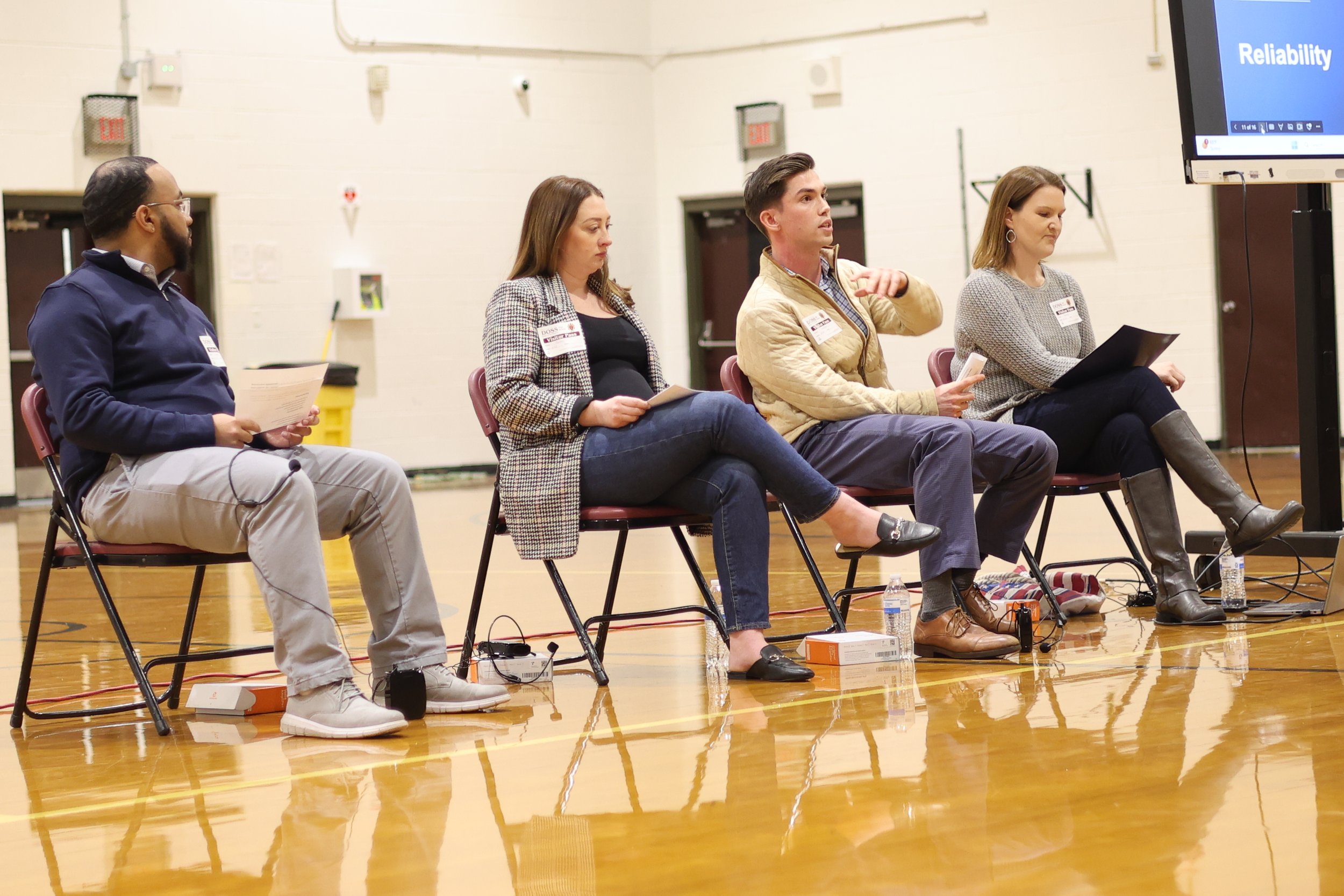
Recently, the Freshman Academy at Doss partnered with GE Appliances for an interactive "Ethics and Being Your Best Self" panel. The session was held within the school’s Career Choices class, a foundational course designed to help freshmen navigate the transition into high school while exploring the specialized pathways—Health Sciences, Tech, and Business & Education—they will enter during their sophomore year.
The Character Framework
The session began with a reflection on personality rather than a lecture on corporate policy. Using a “Who Would You Hire?” video, students were introduced to five distinct archetypes: the reliable but quiet Serious Sam, the hardworking but perennially late Clumsy Casey, the confident but negative Mean Morgan, the energetic but distracting Goofy Gabe, and the team-playing but occasionally unfocused Friendly Felicity.
“Ethics is about being the best version of yourself,” said Angela Thomas, Senior Human Resources Manager for GE Appliances. She framed the conversation around personal growth, noting that HR exists to help people succeed, ensure fairness, and keep workplaces safe. By asking students to identify their own strengths and weaknesses through these characters, the panel helped freshmen discuss complex concepts like accountability and integrity with surprising vulnerability.
"I like how they showed all the pros and cons of the characters," noted Emilia, a Doss freshman. "I feel like that can help develop a good understanding and a good work relationship."
The Four Principles of the Workplace
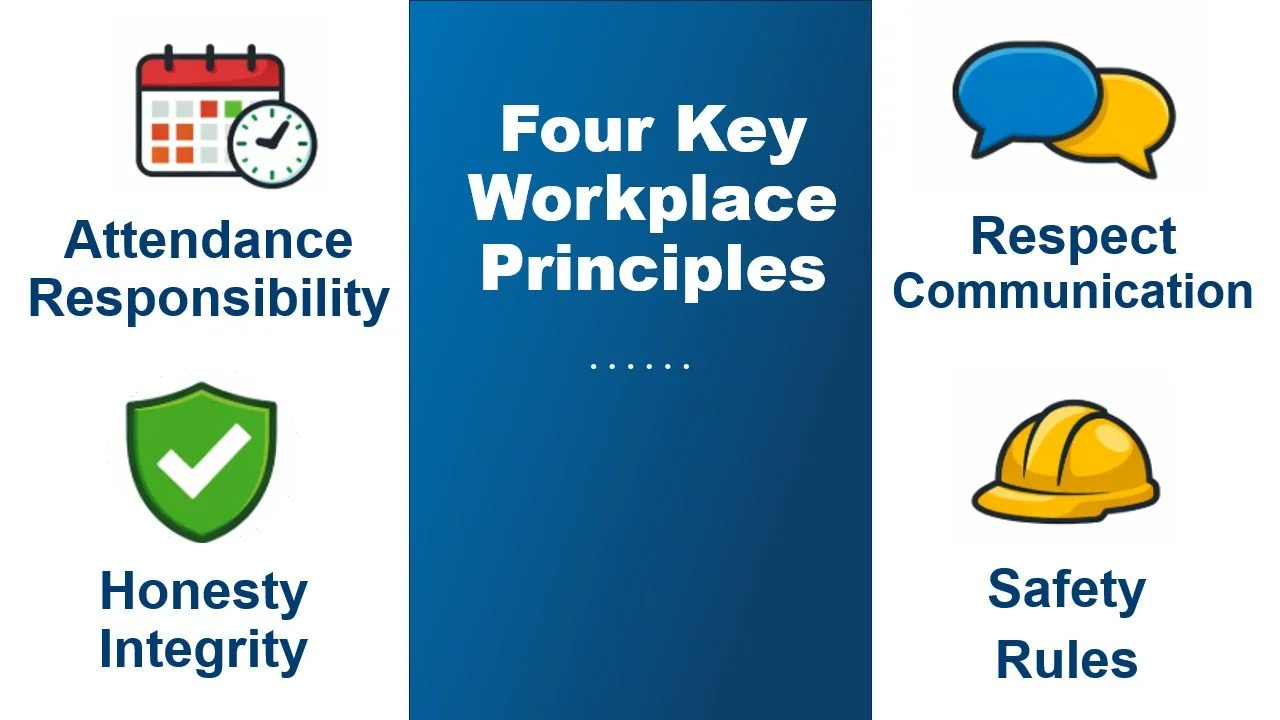
The panel of Human Resources professionals from GE Appliances moved through four core principles that serve as the bedrock of professional life. For each pillar, the team offered a real-world perspective that bridged the gap between a classroom assignment and a professional career.
Attendance and Responsibility: When the panel discussed the actual cost of a ten-minute delay on a production line, the concept of attendance shifted from a school rule to a professional necessity. "For an architect, you're gonna need to be relied on the most," said student Karsten. "I want to be that type of person you go to whenever you have a problem."
Integrity and Honesty: The session challenged students to consider what happens when a mistake goes unnoticed. Paris highlighted that honesty is the foundation of a resilient career. "I realize that honesty is just telling the truth and there’s some people who can actually handle it,” she noted.
Respect and Communication: Students tackled scenarios regarding difficult coworkers and group disagreements. Bella, another student, highlighted the practical side of the panel’s advice: "If you can't communicate with someone, then you're not really going to be able to figure stuff out or come up with solutions to problems."
Safety and Rules: In a session particularly relevant to future tradespeople, the panel explored why following safety rules is critical and how to encourage others to follow them. "When I grow up, I want to be either a carpenter or a welder," said Paris. "So the most important thing will be the safety and rules, because they're there to protect you."
Best Practices: Engaging the Freshman Mindset
Engaging 14-year-olds in a discussion about workplace ethics requires a shift in traditional presentation styles. The Doss and GE Appliances partnership highlights several best practices for reaching freshmen:
Relatable Archetypes: Using the "Who Would You Hire?" characters allowed students to self-reflect without feeling judged. It turned a lecture into a mirror.
Short, High-Impact Commentary: Panelists kept their answers to 45 seconds or less, focusing on real-world examples that favored story over theory.
Peer Interaction: Each principle began with a "School Prompt," such as whether cheating should affect a grade. This allowed students to voice their opinions first, creating a "buy-in" before the professionals weighed in.
The "Outside Voice" Effect: Andrew Zemanski, a Career Choices teacher at Doss, notes that industry partners provide a unique form of validation. "They can listen to a teacher all day long, but that doesn't mean they're going to take it to heart like they might hearing it from somebody else."
The Personal Code
Students are now transferring what they learned into a final classroom assignment: writing their own Personal Code of Ethics to present to their peers. This exercise turns the panel's advice into a blueprint for how they intend to carry themselves through high school and into their future careers.
"No matter what they want to do later in life, the soft skills they develop in high school are going to work in any job," Zemanski said. "I know a lot of our kids know how to do the right thing, so it's a matter of living by that."