
Southern High School Machinists Launch Careers at CEPEDA Associates
"We got involved for workforce but stayed involved because it changes lives," says Keith Hill, Vice President of Operations at CEPEDA Associates.
In the high-stakes world of advanced manufacturing, the precision required to build components for the U.S. Navy is non-negotiable. For CEPEDA Associates, meeting those demands requires a steady pipeline of specialized talent ready to handle "the Navy way" of doing things. Hill recognized a growing gap where young people lacked traditional manufacturing skills and decided to take a proactive approach to bridge it.
To solve this workforce gap, Hill didn’t have to look far. He simply went back to his roots.
The Alumni Connection
As a 1988 graduate of Southern High School, Hill knew the potential of the school’s technical programs. He reached out to the Academies of Southern through their website, connecting with machine tool teachers Sarah Cashman and Jason Longenbach to see if the current generation of students was ready for the "Navy way" of doing things.
What he found in the Machine Tool pathway was a level of preparation that exceeded his expectations. Hill noted that on his very first visit to the Southern shop, he saw students practicing "5S" principles, a lean manufacturing methodology focused on organization and efficiency.
"The way Southern prepares these kids is phenomenal," Hill said. "They reduced the risk of hiring high schoolers amazingly because they come in as qualified, good-character kids."
“We got involved for workforce but stayed involved because it changes lives.”
From Summer Pilot to Real-World Success
The partnership began as a summer pilot program with five students. The mission was clear: help CEPEDA catch up on a critical assembly project that was facing tight delivery dates. The five Southern students didn’t just meet the challenge; they helped the company deliver on time by the end of the summer.
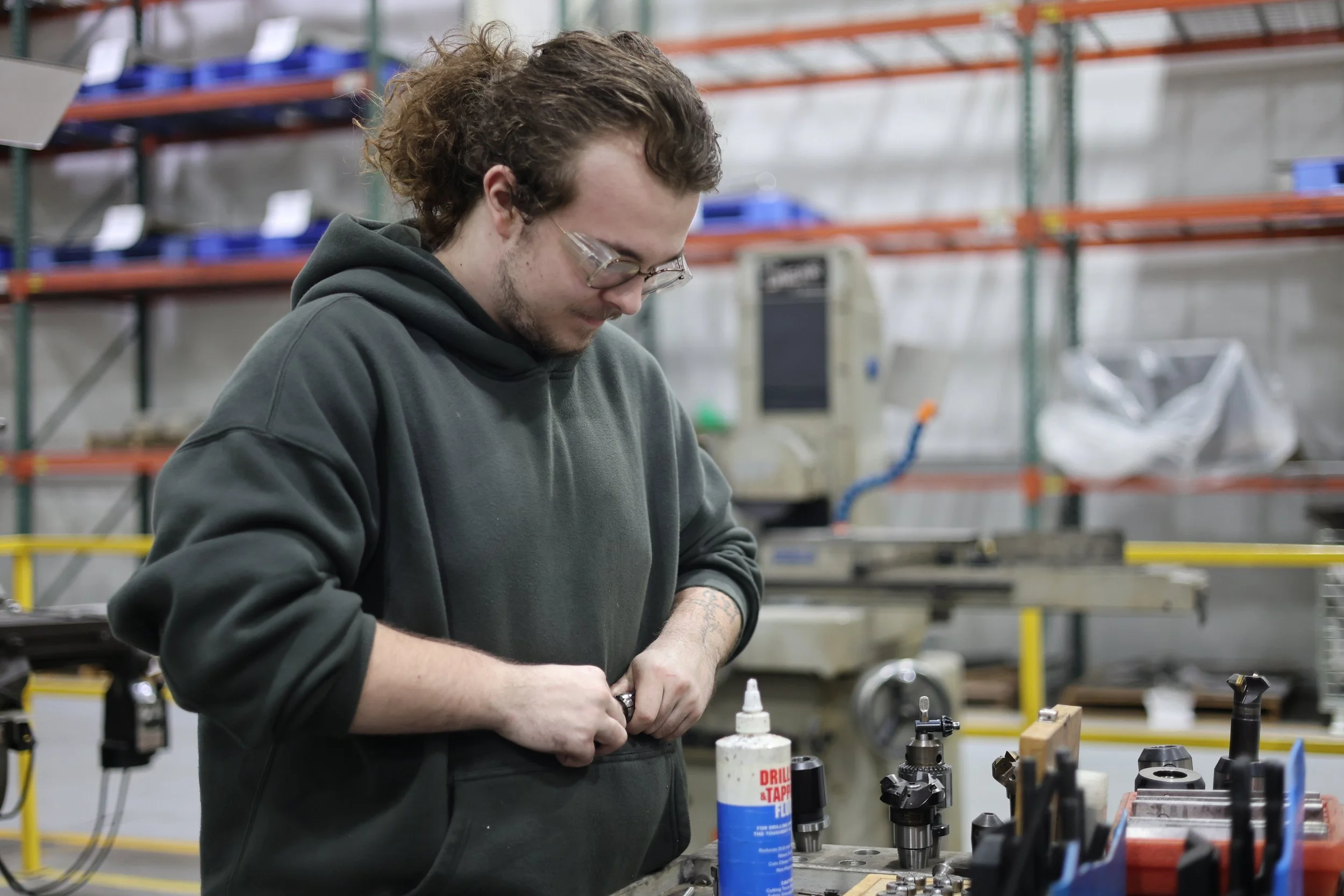
"I felt nervous walking in," admitted Koi Dalton, a senior. "I thought people might make fun of me because I was just a kid from a school shop. But everyone was so welcoming and taught me everything from the bottom up."
That summer success paved the way for a formal co-op opportunity during the school year. Now, these students spend half of their days at CEPEDA, transitioning from basic assembly to high-tech CNC (Computer Numerical Control) machining and engineering design.
A Career Without Constraints
The Academies of Louisville model is built on the idea that students shouldn't have to choose between a "college track" and a "career track". The CEPEDA partnership is a perfect example:
The Apprenticeship: For those ready to enter the workforce, CEPEDA is launching a formal apprenticeship program where students can earn a Journeyman card, leading to higher wages and long-term security.
Engineering Pathways: Students like Muhammed Muratov and Diego Pinacho plan to attend the University of Louisville Speed School of Engineering while continuing to work at CEPEDA as interns.
"We represent a pathway," Hill said. "You can make a very good living in manufacturing. If you don't decide to go to college, there's a path. If you do, we can support that, too."
Full-Circle Impact
As these seniors prepare for graduation in May, they aren’t just leaving with a diploma; they are leaving with a specialized career path already in motion. For Jadon Key, the experience at CEPEDA Associates ignited a passion he didn't realize he had until he got behind the machine. "In my second year with Mrs. Cashman, I was opened up to the world of mills and lathes," he said. "Now, I want to be a journeyman machinist."
This collaboration proves that when local industry reinvests in its own backyard, the transition from student to professional becomes a seamless reality. By the time these students walk across the stage, they will have already spent months contributing to the nation's defense—turning raw stock into precision components for the U.S. Navy. Whether they are entering the workforce as a journeyman or pursuing an engineering degree at the UofL Speed School, they are graduating with the one thing every employer values most: a proven track record.
As Keith Hill noted, this isn't a one-time project; it’s the blueprint for a permanent talent pipeline. "This is a thing we look to do years in, years ahead," Hill said. "[We plan on] bringing them on board and sending them through that same pathway—from assembly to machining to engineering—to continue that pipeline."