
The "Aha" Moment: How JCPS is Growing its Next Generation of Educators
“I would say the most rewarding part of the teacher apprenticeship so far has been definitely seeing the ‘aha’ moment with the students. They’re finally getting that click, and you see that light in their eyes. It just makes me very happy.”
For Leah Hopper, a junior at Fairdale High School, that "click" isn't just a classroom observation; it’s a professional milestone. While most high school juniors are navigating the middle of their teenage years, Hopper and five of her peers are navigating the front lines of the classroom. They aren’t just watching; they are teaching, correcting, and inspiring.
The JCPS Teacher Apprenticeship Program is a strategic "grow your own" initiative designed to solve the educator shortage by identifying homegrown talent early and fast-tracking them into a career. By the time these six pioneers, five of whom are Academies of Louisville students, graduate college at age 21, they won't be "green" first-year teachers; they will be seasoned professionals with four years of classroom experience already under their belts.
Building the Pipeline: Rigor Over Observations
The program is far from a standard elective. It is a multi-tiered, competitive journey that begins with a formal application and a high-stakes interview process with JCPS Human Resources. Those selected enter a pipeline that bridges high school, higher education, and full-time employment.
“We’re taking 16-year-olds and giving them hands-on experience,” says Brandy Scott, the JCPS CTE Instructional Lead who pioneered the program. “They are getting four years of first-year teaching out of the way. They graduate high school with an Associate's degree, and they’ll be the best educators JCPS has ever had.”
The academic load is intense. Apprentices balance their standard high school curriculum with nine hours of dual-credit college courses each semester through Jefferson Community & Technical College (JCTC) and the University of Louisville. Scott meets with the cohort bi-weekly to ensure they are excelling academically before they step into their spring mentorship—the "on the job" training phase where the theory of the textbook meets the reality of the bell schedule.
“Seeing them grow is probably the biggest thing I’ve loved. They’ve made a huge impact on me. I’m very proud of every one of them.”
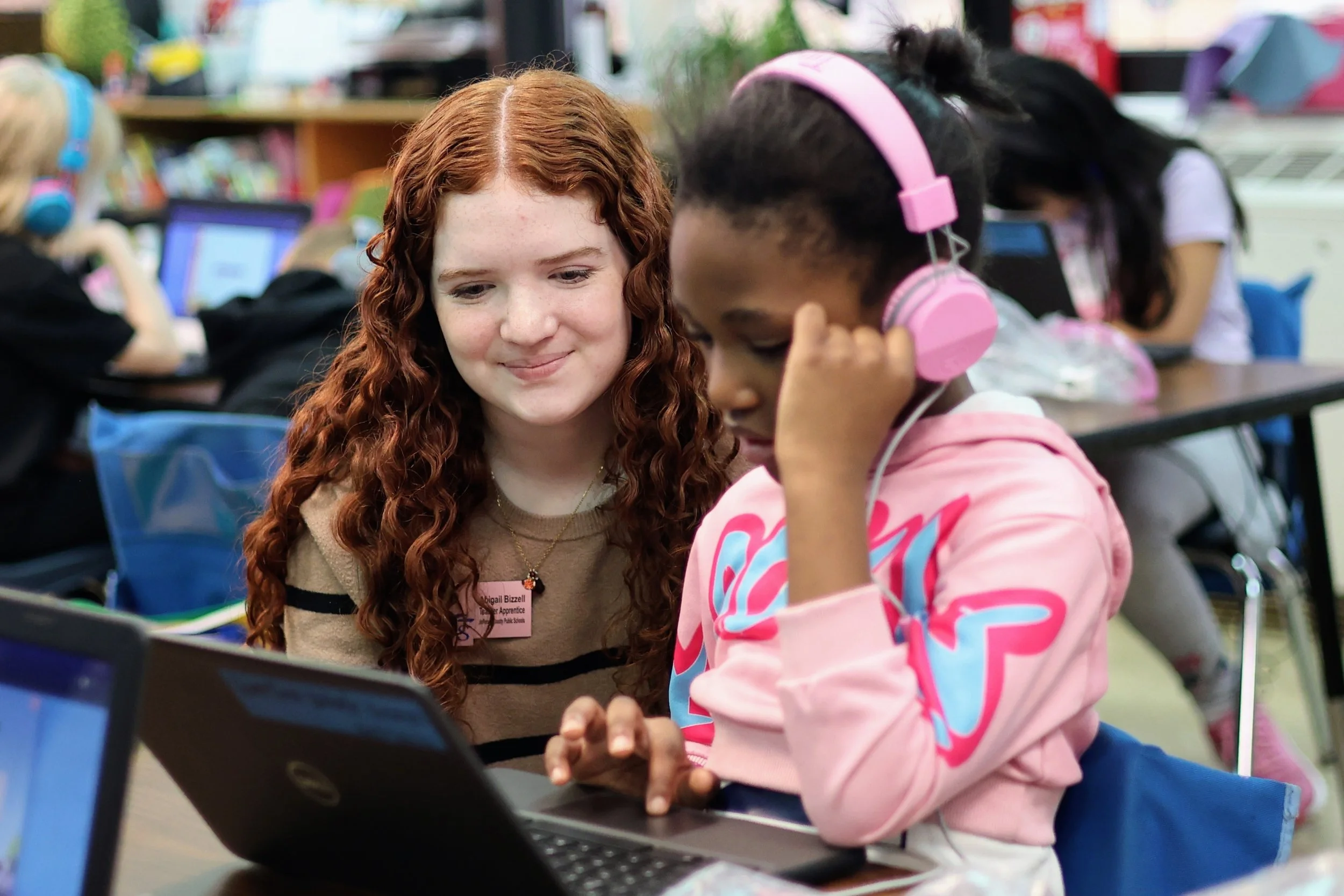
A New Standard for Classroom Readiness
For decades, the path to becoming a teacher followed a predictable academic route: years of college lectures followed by a brief stint of student teaching. The JCPS Teacher Apprenticeship flips that script, ensuring pedagogical "operating systems" are built on lived experience. By placing apprentices in diverse environments—ranging from kindergarten literacy circles to middle school labs—the district is allowing them to stress-test their career goals before they even receive a high school diploma.
“We’ve been in classrooms since our sophomore year,” explains Madeline Colville, a junior at Fairdale High School. “We’ve seen many different mentors and teaching styles. We are getting more than just textbook learning; we are getting real experience.”
This immersion offers a level of clarity that traditional programs often lack. For Colville, the experience helped her realize that her true calling lies with "the littles," shifting her focus toward kindergarten. Meanwhile, Abigail Bizzell, a junior at Ballard High School, has spent her time at Wilder Elementary studying the subtle art of classroom management. “I’ve watched how my host teacher corrects students without stopping the lesson,” Bizzell notes. “She keeps the focus on learning while keeping everyone on task. I’m starting to take on those non-verbals myself.”
The Mastery of Impact: Moving the Needle
These apprentices aren't merely assisting with filing or bulletin boards; they are driving instructional growth. In intervention settings, where closing achievement gaps is a high-priority mission, the presence of an apprentice provides a critical "edge up."
“The students I’m working with started at zero, and now they are at 90%,” Colville shares. “Knowing that I was the one who got them there is a great feeling.”
This sense of agency is vital in specialized classrooms, such as Moderate to Severe Disabilities (MSD) settings, where building rapport is the primary tool for success. Trayonna Allen, a Central High School junior, sees her role as a barrier-breaker for students who are often underestimated. “People think a learning disability stops a student from being able to do anything,” Allen says. “But these kids just need help getting past the barrier that makes them think they can’t do it. I want them to know they can do this work.”
The Professional Shift: From Student to Educator
The most significant transformation occurring within the program is the internal shift from "high school student" to "professional educator." Balancing the weight of university-level coursework with the daily responsibilities of a classroom requires a level of grit that is shaping the apprentices' identities.
“It’s truly shaped who I am and allowed me to step out of my shell,” says Moore High School’s Erin Kestler. “I’ve developed bonds and found the confidence to teach things I am passionate about.”
That confidence is essential for a career that often faces external skepticism. Leah Hopper notes that the apprenticeship has helped her navigate the typical discouragement surrounding the field. “When people say things like ‘Oh, you won't make enough money,’ I’ve realized it isn’t about the money. It’s more about how you are able to help these students grow educationally and socially.”
Closing the Circle: The Path to Option 9
The journey for these six pioneers—Bizzell, Colville, Hopper, Allen, Kestler, and Ella Kurvers—is a long-term commitment. After graduating high school with 48 college credit hours, the apprenticeship transitions into the Adult Apprenticeship phase.
Under the Option 9 model, these students will serve as full-time JCPS Instructional Assistants during the day while completing their Bachelor’s degrees through online coursework at night. By the time they sign their official teaching contracts, they will have spent nearly half a decade mastering the "aha moment" from both sides of the desk.
“At the beginning, I thought I wanted to be a teacher,” Allen concludes. “But now I know for sure that I will be a teacher.”