
The Student in the Adult Face: Sarah Cashman’s Full-Circle Journey at Southern High School
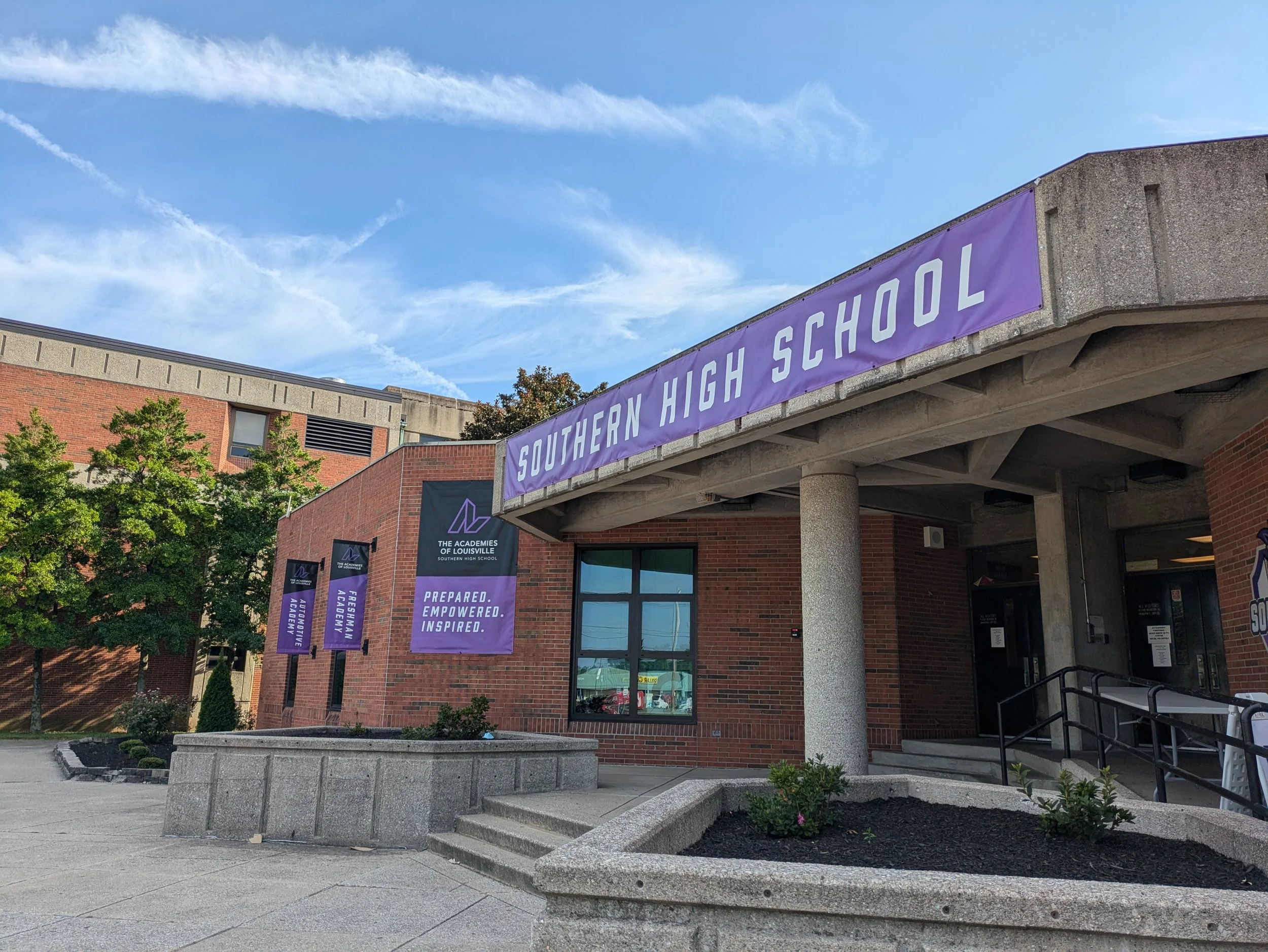
Dr. Joseph Ellison, III has spent 25 years in education, and he was caught off guard during a tour last year of Southern High School. As the Assistant Superintendent of High Schools, he was walking through the Machine Tool & Die lab when he was stopped in his tracks, noticing the instructor leading a group of focused students.
“There are times where you see the student in the adult face,” Dr. Ellison reflects. “She looked very familiar, but I couldn't quite place her. I looked at the principal and asked, ‘Who is that?’ She said, ‘That’s Mrs. Cashman.’ I went, ‘Wait a minute, are you serious?’”
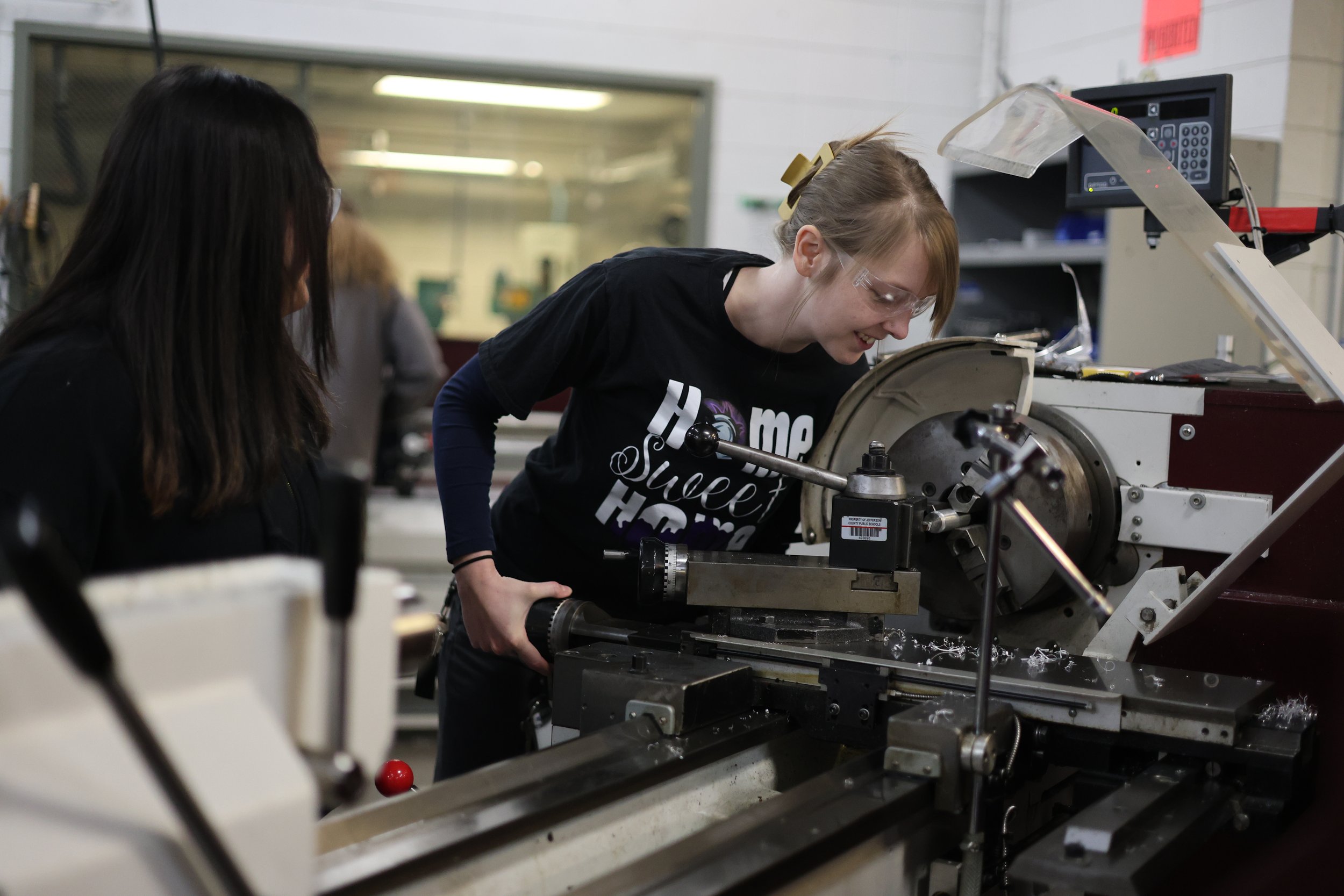
For Dr. Ellison, who served as an assistant principal at Southern during Mrs. Cashman’s high school years, the moment was the ultimate "full circle." The girl he remembered as a quiet, model student was now the Machine Tool & Die instructor commanding the room—the very same lab where she had first discovered her trade.
The High School Student
While Mrs. Cashman is now an award-winning educator and a journeyman toolmaker, her path into the trades started almost by accident.
“I had no idea what this class even was,” Mrs. Cashman laughs, recalling her freshman year sign-ups. “My friend was like, ‘You should do this class with me,’ and I was like, ‘Okay.’ I wasn't a huge fan at first because there was a lot of math and classroom work, just like there is today.”
The turning point came when the machines were turned on. “Once I actually got into the shop and started making everything and finding all these cool projects, I really enjoyed it. Then I heard about the money I could make and how I could get my school paid for—that’s what really locked me in.”
The legacy she is building today is rooted in a milestone she set during that time. When she was a senior, the National Institute for Metalworking Skills (NIMS) certification was just being introduced to Southern High School.
“I was the first Southern student to take and pass the test,” Mrs. Cashman recalls. It was a foundational moment that validated her skills before she even stepped into a professional shop. Decades later, that same standard remains the benchmark for her classroom. “We still use that same Measurement, Materials, and Safety test today to get our students PSR (Postsecondary Readiness).”
Breaking the Mold
After graduating from Southern, Mrs. Cashman entered an industry where she was often the only woman in the room. Guided by her former teacher, Joe Simon, she secured her first role at Precision Metalworks, a stamping and manufacturing facility just down the road on Preston Highway. It was there that she completed her rigorous four-year apprenticeship to become a journeyman toolmaker.
Her journey through the trade continued at Yamamoto, where she gained specialized knowledge in tooling, and eventually to Metalsa, where she worked in her first union environment helping produce Ford frames. These stops were the classrooms where she mastered the "intricate stuff" that she now passes on to her students.
“When I went into my first job, I didn't realize there weren't many females,” Mrs. Cashman says. “It was a bit of a shock. There were instances of jobs not wanting to hire me—and some almost said it was because I was a girl without using those exact words. That was hard.”
Today, those hurdles serve as a vital teaching tool. As an instructor, Mrs. Cashman uses every stop of her career journey to prepare the next generation of machinists for the realities of the shop floor. Whether she is explaining a complex tooling setup or advising a female student on how to navigate a male-dominated industry, she ensures her students have the confidence she had to build on her own.
“She was so passionate about the work she was doing,” says Dr. Ellison. “Her statement to me was, ‘Someone did this for me... and I’m trying to do the same for these students.’ It was a moment many of us in education don't have the opportunity to experience.”
The Legacy of "Home"
For Mrs. Cashman, Southern High School isn't just a workplace; it’s a family heirloom. Her mother worked as a lead custodian at the school while she was a studen.
“My mom worked here, but she’s not the only connection,” Mrs. Cashman explains. “I have an older sister who was a student here. My grandma went to Southern in the fifties. I have a lot of family that went through Southern High School. It’s almost like home.”
That sense of belonging is exactly what her former teacher, Joe Simon, hoped for when he heard she was applying for his old job. “It was so gratifying to know that she was back in the shop that she learned in,” says Simon, now the Assistant Director of the Speed Center for Innovation at the University of Louisville. “She operates from a level of confidence in her abilities. She has that ‘I can’ attitude, and it really projects out.”
Investing in the Future
The impact of Mrs. Cashman’s return is perhaps most visible in the success of her students. This year alone, the pathway has 15 students in co-op positions, turning raw metal into precision components for local industry. For seniors like Muhammad Muratov and Diego Pinacho, she was the deciding factor in their career paths.
“Mrs. Cashman was one of the biggest factors in me staying at Southern,” says Muhammad, who had considered switching schools before finding his niche in the lab. “She’s such a great teacher. She taught me a lot of the skills I need to know and really helped set me up for success.”
Diego agrees, noting that her "been-there" perspective makes the complex world of manufacturing accessible. “I really liked her methods of teaching—demonstrating in class what we have to do before coming to the shop. She was very helpful when I was just starting out.”
From the halls her grandmother walked in the 1950s to the state-of-the-art lab she leads today, Mrs. Cashman has shown that the best way to move forward is to remember exactly where you started.